
This article was translated by artificial intelligence and reviewed by humans.
The Seventh Art (Cinema) has the ability to transport us and immerse us in other universes, scenarios, stories, and characters! And when it comes to movies that address important topics, the effect is even more intense. This is the case with these seven movies that address Deaf identity, community, and culture.
If you are interested in learning more about Deaf people, prepare your popcorn and read through this guide from Hand Talk with our selection until the end!
1. The Miracle Worker
A classic! An American biographical drama in black and white, based on the real story of Anne Sullivan (played by Anne Bancroft) and Helen Keller (Patty Duke).
Helen (1880–1968) was an American writer, lecturer, and social activist, and the first deafblind person in history to earn a college degree.
Today, there are various forms of accessible communication, such as tactile sign language and Tadoma (learn more in our article What is Deafblindness?), but until she was seven, Helen was treated like many deafblind people of her time: unable to communicate. The film portrays the discovery and teaching of tactile sign language, taught by Anne!

The connection between the educator and her student, the development of tactile sign language, and the brilliance of both made known the potential of deafblind people and those with other disabilities, in a society that was ableist—after all, Anne was also a person with visual impairment.
And a fun fact: Helen Keller and the actress who played her, Patty Duke, met before the movie production, bringing an even greater sense of authenticity to the movie.

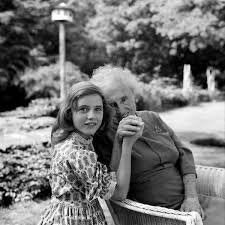
In the photo on the left, Helen Keller with teacher Anne Sullivan. On the right, Helen with Patty Duke, the actress who portrays her.
Year: 1962
Duration: 1h46m
2. And your name is Jonah
A sensitive and necessary movie, the drama portrays part of the childhood of Jonah (Jeffrey Bravin), a seven-year-old, who was mistakenly diagnosed as having an intellectual disability.
Jonah did not have normal development for a child of his age, until his mother met Deaf people. Finally, Jonah was enrolled in a school that uses ASL, and discovers that what he was lacking is essential to everyone’s life, but denied to many: communication.
With Jonah, we learn how access to information can be transformative in the lives of both disabled and non-disabled people—and, when it comes to Deaf people, how knowledge of their own culture and sign language is essential for a sense of belonging and social inclusion.

The movie also addresses ableism, audism, and discrimination against Deaf people, preventing specialists from understanding Jonah’s specific needs by assuming he is “incapable,” denying him his right to communicate.
Finally, a fun fact: Jeffrey Bravin (who played Jonah) is actually a Deaf person, and today he is the Executive Director of the American School for the Deaf in West Hartford, a master’s degree holder in Deaf education, school administration, and supervision, and a doctoral candidate in educational leadership.
Year: 1979
Duration: 1h34m
3. Sweet Nothing in my Ear
Your child becomes Deaf at the age of four. Would you consider a cochlear implant, knowing its risks? This is the very decision addressed in the movie.
The American drama portrays the differing perspectives between Deaf and hearing people, as Laura (Marlee Matlin) is the Deaf mother, and Dan (Jeff Daniels) is the hearing father of Adam (Noah Valencia), who are in a legal dispute over the cochlear implantation for their child.
What is a priority for a Deaf person? What is health? What could be considered a benefit?
The movie addresses important themes, such as Deaf identity and pride.

Year: 2008
Duration: 2h
4. Marie Heurtin
We are in France, at the end of the 19th century. The young Marie (Ariana Rivoire) is Deafblind and, due to the lack of knowledge and ableism of the time, she lived a mere existence.
Her father, a modest artisan, sends her to the Larnay Institute, a Catholic institution known for serving young Deaf people, where Sister Margueritte (Isabelle Carré) teaches her tactile sign language to communicate.
The French drama brings visibility to Deafblindness, especially by having a Deaf and visually impaired actress in the lead role, and it won the Variety Piazza Grand Prize at the 2014 Locarno Festival.
Another fun fact? The plot is inspired by a true story, and from Marie and Margueritte, other Deafblind young people were educated at the institution—accompanied by Marie herself.
Year: 2014.
Duration: 1h35m
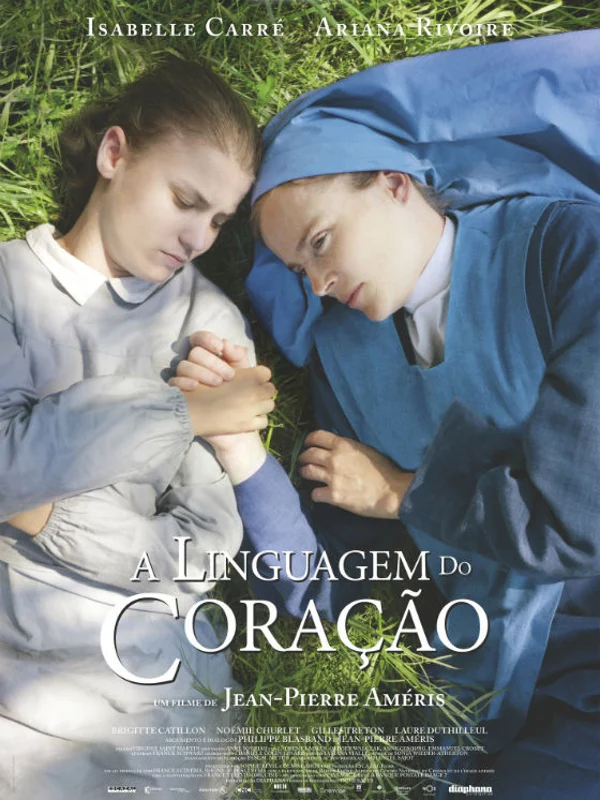
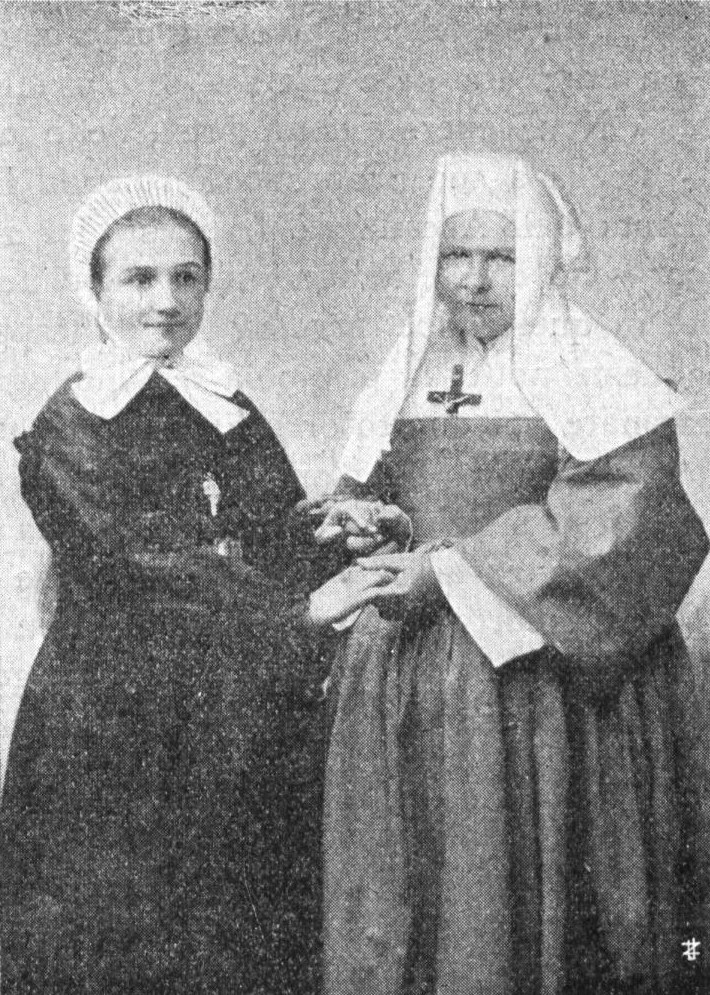
Real photograph of Maria and Margueritte.
5. Sound of Metal
Another American drama on the list! This one tells the fictional story of Ruben (Riz Ahmed), who becomes Deaf. The movie portrays his discovery of his Deaf identity, as he had been living as a hearing person.
What sets the story apart is its portrayal of a hearing person’s perspective and their “prejudices” about the Deaf reality. Throughout the story, these concerns give way to anti-ableist empowerment, with hints of self-awareness.
The movie received six Oscar nominations in 2021: Best Picture, Best Actor, Best Supporting Actor, Best Original Screenplay, Best Editing, and Best Sound, winning in the last category.
A fun fact about the movie: Director Darius Marder is the grandson of Dorothy Marder, a Deaf photographer and activist who championed captioning in films. According to him, the film was dedicated to his grandmother.

Year: 2019.
Duration: 2h
6. La Famille Bélier
In the penultimate position of our list, a French comedy! The movie portrays a 16-year-old hearing girl who has Deaf parents and a Deaf brother—she is a CODA (Child of Deaf Adults).
Paula (Louane Emera) has more responsibilities than a typical teenager: in a hearing world where few people know French Sign Language (LSF), she becomes the family’s “interpreter” for financial, administrative, and medical matters. Until Paula faces a dilemma: should she follow her dreams or stay with her family?
The Deaf community gave mixed reviews of the film. Although it highlights what it means to be CODA, the Deaf characters are stereotyped and played by hearing actors, which can be seen as “cripface,” and disrespectful.

Year: 2014
Duration: 1h46
7. CODA
The American version of La Famille Bélier, CODA is considered a milestone in cinematography, as it has a significant portion of the cast made up of Deaf people playing Deaf characters!
It premiered at the 2021 Sundance Film Festival (Park City, Utah), and Apple acquired its distribution rights for $25 million, a record for the festival! The movie also won the 2022 Oscars for Best Picture, Best Adapted Screenplay, and Best Supporting Actor; and the Golden Globe for Best Supporting Actor and Best Dramatic Movie.
It was highly praised by the Deaf community for representing Deaf characters as independent, autonomous people, politically, financially, and sexually active.

And for those curious: the movie is called CODA because this is an abbreviation for “Children of Deaf Adults.” CODAs are hearing children raised by Deaf parents, often balancing life between the “hearing world” and the “Deaf world.” Learn more about this term and what it represents in our article Do you know what it is like to be a CODA?
Year: 2021
Duration: 1h51
8. Deaf President Now!
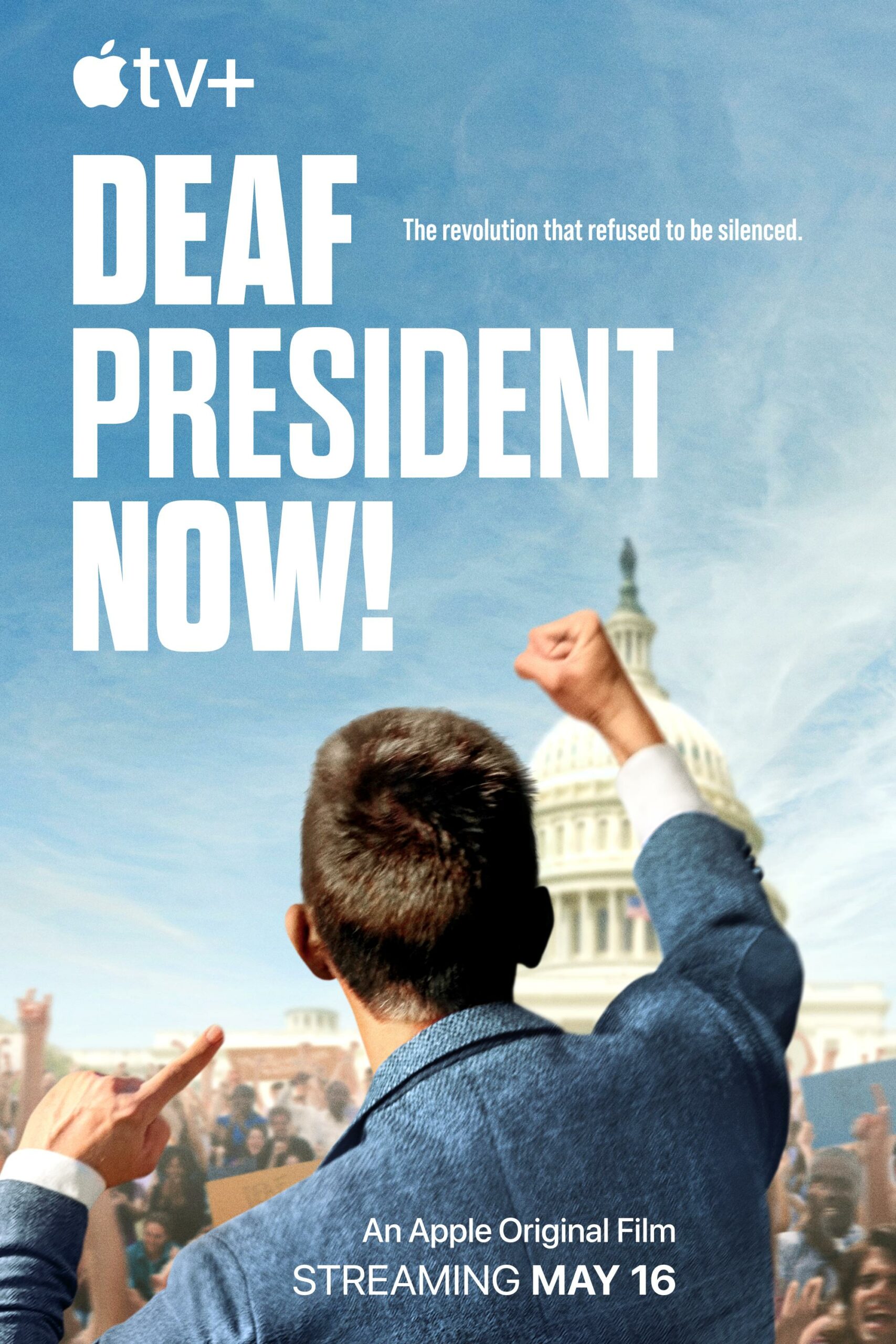
An American documentary released in 2025, the feature film tells the story of the 1988 student protest at Gallaudet University, located in Washington, D.C., the capital of the United States.
At the time, the institution (which to this day is 100% dedicated to Deaf culture) faced harsh criticism from its students for appointing a hearing president over other Deaf candidates. In response to protests, boycotts, and rallies, the students succeeded in having the position filled by Gallaudet’s first Deaf president, Dr. I. King Jordan.
Premiering at the Sundance Film Festival, the film also features interviews with leaders of the movement and employs the narrative technique known as the “Deaf Point of View,” which, as the name suggests, centers the perspective of Deaf individuals.
More than just a documentary, it is a true immersion into Deaf culture, portraying the organization and strength of the community.
Year: 2025
Duration: 1h21
The Importance of Representation in Movies
“Representation is seeing someone like me achieve places I couldn’t see myself in before,” this quote by Thalya Teles, a Deaf-oralized person and Hand Talker at an internal Hand Talk meeting, captures this importance well.
Seeing yourself, your reality, and your story represented, as long as it’s done realistically and free from wrong assumptions or “prejudices,” is a true symbol of inclusion and diversity! And if this protagonism also happens behind the scenes and in decision-making, the transformative potential will be even greater.
We celebrate representation in Hand Cine, an internal Hand Talk initiative, when we watched CODA together online and remotely!

“Hand Cine is a unique experience that combines inclusion, culture, and learning, creating an accessible and enriching space for the Deaf community.” – Lauro Neto, Deaf person and Handtalker from the Customer Success team.
“This movie is very special, and having so many people wanting to connect with our culture just made the screening even more special!” – Marcella Marrara, CODA and Hand Talker from the Customer Success team.
“This kind of dynamic strengthens not only the company culture but also our relationship as colleagues (and humans too)!” – Sara Paulo, from the Marketing team.