

Digital tools with real impact
Companies
Make your website more accessible.
Transform your website content with the Hand Talk Plugin, integrating Sign Language and dozens of assistive features.
- Simplified installation
- Performance reports
- Security and compliance guarantee
 Simplified installation
  Performance reports
  Security and compliance guarantee
Companies
For you
Learn Sign Languages
“World’s Best Social App” by the UN, translate and learn a new language in a fun and effective way with the Hand Talk App.
- Brazilian Sign Language (Libras) and American Sign Language
- Translation of texts, audio, and images.
- Character customization
 Brazilian Sign Language (Libras) and American Sign Language
  Translation of texts, audio, and images.
  Character customization
 Digital accessibility: a continuous learning journey
Accessibility courses
HT Academy
A journey of discovery into the world of digital inclusion.
- 100% online and accessible
- Taught by experts
- Certificate of completion
 100% online and accessible
  Taught by experts
  Certificate of completion
Free
Link
The largest digital accessibility festival in Latin America.
- + 42 thousand registrations
- + 110,000 views
- + 86 hours of content
 + 42 thousand registrations
  + 110,000 views
  + 86 hours of content
 Companies that chose Hand Talk


Why choose Hand Talk?
-
Deep connection with the deaf community and People with Disabilities.
-
Artificial intelligence and cutting-edge technology in its assistive features.
-
Award-winning solutions recognized worldwide for their impact.
-
Full team of experts in digital and linguistic accessibility.


Breaking barriers and
building stories
We are very happy because we know the impact of our work not only on the lives of our approximately 47,000 employees, including nearly 500 employees with hearing impairments, but also on their families. And this is something fantastic for us! We are pioneers in Brazil and the first Sodexo company in the world to have a tool like Maya, which through our partnership with Hand Talk, allowed us to bring this innovation to the company.
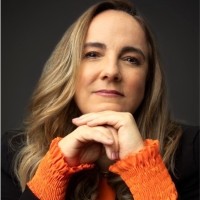
Lilian Rauld
Sustainability and ESG Manager | Hand Talk Plugin“My story is with Hugo! I started my Brazilian Sign Language course in November 2019 to help a deaf woman with interpretation during Holy Mass! Early in 2020, the Pandemic came and we stopped the in-person sign language course. But I could not stop learning, and I push myself to bring the word of God to that deaf woman — that's when I started clearing up all my doubts about signs with Hugo, and whenever possible I joined the Hand Talk live sessions, which by the way are wonderful, and I learn many signs from the interpreters and deaf people who take part! Big hug from the heart 🥰🤟”

Rose Aparecida Rodrigues
Sorocaba – SP | Hand Talk AppGlobally recognized excellence
Awards
-
Gifted Citizen 2016
The world's most innovative solution.

-
IDB Demand Solutions 2014
One of the 16 most innovative startups in Latin America.
-
Rio Info 2012
Brazil's most innovative startup
-
WSA Mobile Content 2013
Best social app in the world, according to the UN.


Media Highlights


Join us and build a more inclusive web today!
Explore the world of accessibility with our content.
-
Nothing About Us Without Us: understand the motto of people with disabilities and what your company can learn from it
This article was translated by artificial intelligence and reviewed by humans. “Nothing About Us Without Us”: if you…
-
Gamification in Sign Language Learning: Discover ASL and Libras While Having Fun!
Gamification turns content into something playful, dynamic, and motivating.
-
Deaf Power <0/: when deaf protagonism becomes potency [Interview]
When Deaf protagonism turns into power: also called Deaf Power, learn how to bring it into your personal…
-
Hand Talk App launches Hands Up: Learning Sign Language can be fun and easy
New feature that will revolutionize how we learn American Sign Language (ASL).
-
“We want to have the power of choice”: What is the importance of International Transgender Day of Visibility?
Check out relevant data and information about the date, along with an inspiring story!
-
Cripface: how incorrect representation harms the inclusion of people with disabilities
Incorrect representation can harm the inclusion of people with disabilities. Read this article and learn more!
-
Inclusive Organizational Culture: Importance and How to Apply It
Discover how to build an inclusive organizational culture by promoting diversity, accessibility, and innovation to engage talent and…
-
“The desire to do the right thing made me blaze trails”: Women in technology
The importance of female leadership in science offers new perspectives and builds a more equitable and just future…